
Why Cloud Analytics Is Becoming the New Standard for Businesses in 2026
Not long ago, business data was locked away on office computers and company servers. If someone wanted a report, they often had to wait for the IT team to generate it. Today, that approach is quickly becoming outdated. In 2026, businesses want instant access to information, whether employees are in the office, working remotely, or traveling. That's why cloud analytics has become the preferred solution for organizations of every size. It allows companies to store, process, and analyze data online without maintaining expensive infrastructure. Cloud analytics isn't just about moving data to the cloud—it's about making data available whenever it's needed so teams can make faster, smarter decisions.
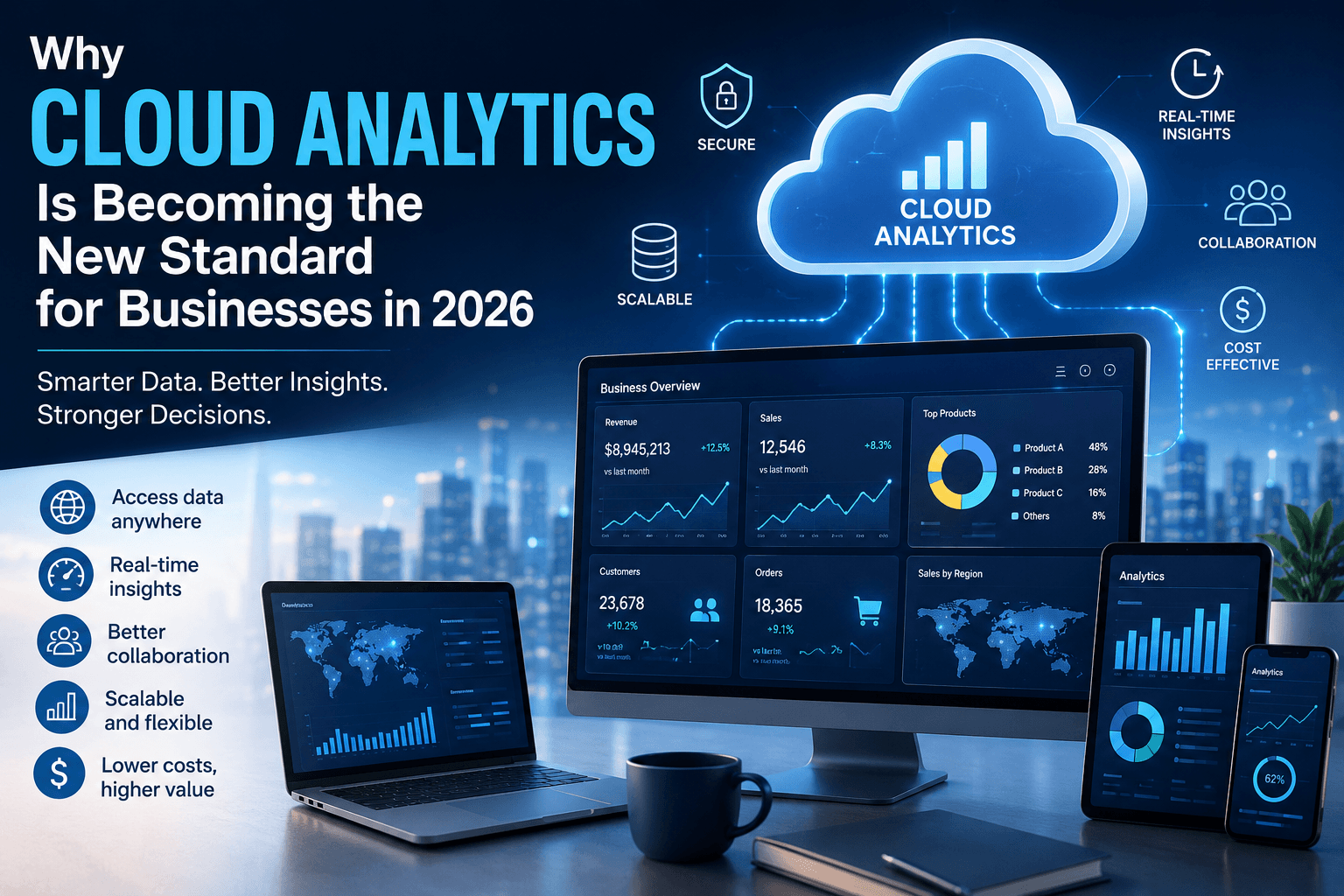
What Is Cloud Analytics?
Cloud analytics is the process of collecting, storing, and analyzing business data using cloud-based platforms instead of traditional on-premise servers.
Rather than purchasing costly hardware and managing software updates, businesses use cloud services that automatically scale as their needs grow. Employees simply log in through a web browser and access dashboards, reports, and insights from anywhere with an internet connection.
Why Businesses Are Choosing Cloud Analytics
1. Access Data Anytime, Anywhere
Modern businesses are no longer limited to one office location. Sales teams, managers, and executives often work remotely or travel frequently.
Cloud analytics ensures that everyone sees the same up-to-date information regardless of where they are, making collaboration much easier.
2. Lower Infrastructure Costs
Maintaining physical servers requires significant investment in hardware, maintenance, electricity, and IT staff.
Cloud platforms reduce these costs because businesses only pay for the resources they actually use. This makes advanced analytics affordable even for startups and small businesses.
3. Real-Time Business Insights
Waiting until the end of the week for reports is becoming a thing of the past.
Cloud analytics platforms update dashboards in real time, allowing businesses to monitor:
Sales performance
Website traffic
Customer behavior
Inventory levels
Marketing campaigns
When information updates instantly, companies can respond to problems before they become costly.
4. Better Team Collaboration
Cloud-based dashboards can be shared securely across departments.
Marketing teams can track campaign performance while finance monitors revenue and operations oversee inventory—all using the same centralized data source.
This improves communication and reduces confusion caused by multiple versions of spreadsheets.
5. Built-In Security
One common misconception is that cloud data is less secure.
In reality, leading cloud providers invest heavily in security features such as:
Data encryption
Multi-factor authentication
Automatic backups
Continuous monitoring
Disaster recovery
For many businesses, these protections are stronger than what they could implement on their own.
How AI Is Enhancing Cloud Analytics
Artificial intelligence has made cloud analytics even more powerful.
Instead of simply displaying numbers, modern platforms can:
Detect unusual business patterns
Predict future sales
Forecast customer demand
Recommend business actions
Automatically generate reports
Identify potential risks
This allows organizations to make proactive decisions rather than reacting after problems occur.
Industries Benefiting from Cloud Analytics
Cloud analytics is transforming nearly every industry.
Retail
Customer purchasing trends
Inventory optimization
Sales forecasting
Healthcare
Patient data analysis
Hospital resource planning
Operational efficiency
Finance
Fraud detection
Risk management
Financial forecasting
Manufacturing
Equipment monitoring
Production planning
Supply chain optimization
Education
Student performance tracking
Attendance analysis
Learning insights
Challenges Businesses Should Consider
Although cloud analytics offers many advantages, organizations should still plan for:
Data privacy regulations
Employee training
Internet reliability
Integration with older software
Access management and permissions
A well-planned cloud strategy helps businesses overcome these challenges while maximizing long-term value.
Best Practices for Getting Started
Businesses planning to adopt cloud analytics should:
Define clear business goals.
Choose a platform that can scale with future growth.
Ensure data quality before migration.
Train employees to interpret dashboards effectively.
Monitor performance and continuously improve reporting.
The Future of Cloud Analytics
The future is moving toward intelligent cloud platforms that do more than visualize data.
Businesses can expect:
AI-generated insights
Natural language reporting
Predictive forecasting
Automated business recommendations
Real-time decision support
Greater integration across business applications
Cloud analytics will become an essential part of everyday operations rather than a specialized tool used only by analysts.
Conclusion
Cloud analytics has evolved from a convenient technology into a strategic business necessity. Organizations that embrace cloud-based data platforms gain faster access to insights, improve collaboration, reduce operational costs, and make more informed decisions.
As businesses continue generating larger volumes of data in 2026 and beyond, cloud analytics will play a central role in turning that information into meaningful action. Companies that invest in modern cloud solutions today will be better equipped to adapt, innovate, and stay competitive in an increasingly data-driven world.
Key Benefits of Cloud Workflow Automation
Increased Productivity
Boost operational efficiency.
Cost Savings
Boost operational efficiency.
Improved Accuracy
Boost operational efficiency.
Scalability
Boost operational efficiency.
Better Decisions
Boost operational efficiency.