
AWS vs Azure vs Google Cloud: Which Cloud Platform is Best in 2026?
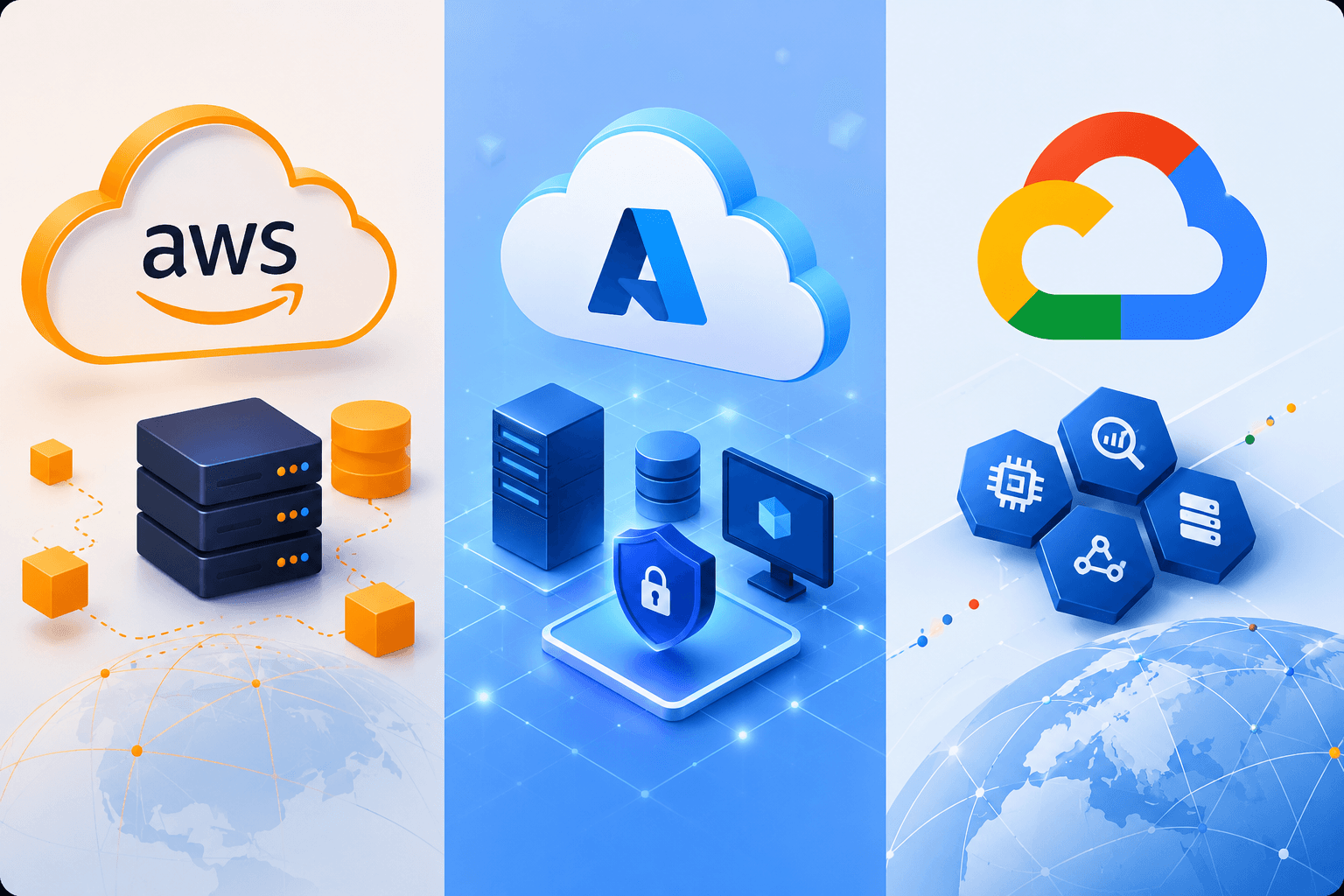
Cloud computing has become the foundation of modern businesses, enabling organizations to build scalable applications, store data securely, and leverage AI-powered solutions. Among the leading cloud providers, Amazon Web Services (AWS), Microsoft Azure, and Google Cloud Platform (GCP) dominate the market. Each platform offers unique strengths depending on business requirements.
AWS (Amazon Web Services)
AWS is the world's largest cloud platform, known for its extensive range of services, global infrastructure, and scalability. It is a preferred choice for startups, enterprises, and businesses that require flexible and reliable cloud solutions.
Best for: Startups, enterprise applications, e-commerce, and large-scale deployments.
Microsoft Azure
Azure is Microsoft's cloud platform, designed to integrate seamlessly with Microsoft products such as Windows Server, Microsoft 365, SQL Server, and Power BI. It is widely adopted by enterprises and organizations using Microsoft technologies.
Best for: Enterprises, hybrid cloud environments, government organizations, and businesses using Microsoft ecosystems.
Google Cloud Platform (GCP)
Google Cloud is recognized for its advanced AI, machine learning, and data analytics capabilities. It is an excellent choice for organizations focused on innovation, big data, and cloud-native applications.
Best for: AI and machine learning projects, data analytics, Kubernetes, and modern application development.
Quick Comparison
Feature | AWS | Azure | Google Cloud |
Best For | Startups & Enterprises | Microsoft Ecosystem | AI & Data Analytics |
AI Services | ⭐⭐⭐⭐⭐ | ⭐⭐⭐⭐⭐ | ⭐⭐⭐⭐⭐ |
Hybrid Cloud | Good | Excellent | Very Good |
Ease of Use | Moderate | Easy | Easy |
Conclusion
There is no single "best" cloud platform. AWS is ideal for businesses seeking scalability and a wide range of cloud services. Azure is the best option for organizations already using Microsoft technologies. Google Cloud stands out for AI, machine learning, and advanced analytics. Choosing the right platform depends on your business goals, existing infrastructure, and future growth plans.
Key Benefits of Cloud Workflow Automation
Increased Productivity
Boost operational efficiency.
Cost Savings
Boost operational efficiency.
Improved Accuracy
Boost operational efficiency.
Scalability
Boost operational efficiency.
Better Decisions
Boost operational efficiency.