
How AI is Revolutionizing Business Intelligence in 2026
Business Intelligence (BI) has always been about one thing—helping organizations make better decisions using data. Over the years, BI tools have evolved from static reports and spreadsheets to interactive dashboards and real-time analytics. Now, in 2026, Artificial Intelligence (AI) is taking Business Intelligence to an entirely new level. Instead of simply showing what happened, modern AI-powered BI platforms can explain why it happened, predict what is likely to happen next, and even recommend the best course of action. This shift is helping businesses move faster, reduce manual work, and uncover opportunities that might otherwise go unnoticed. Whether you're a data analyst, business owner, or decision-maker, understanding how AI is reshaping Business Intelligence is becoming an essential skill.
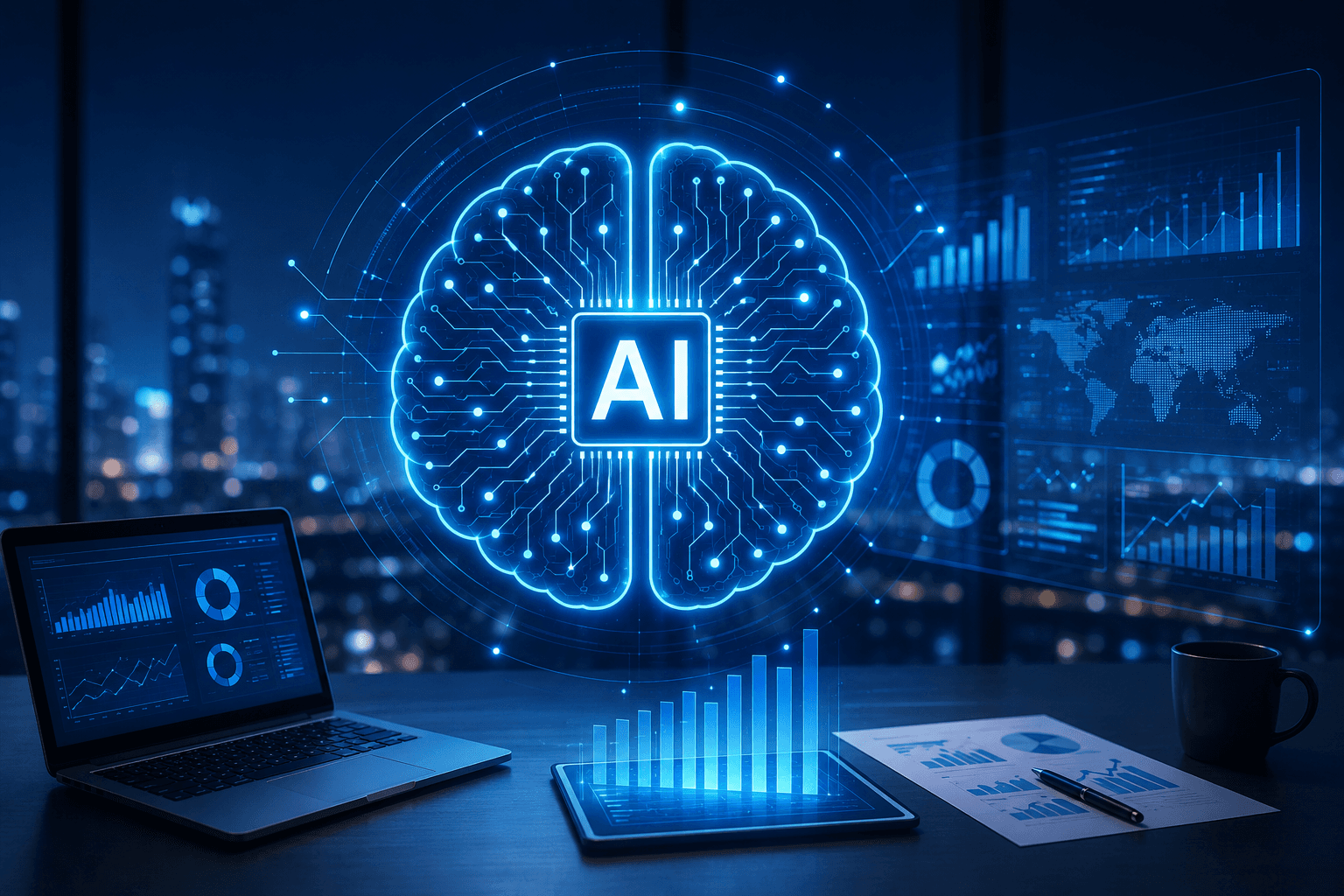
Artificial Intelligence is fundamentally changing how organizations use data. In 2026, Business Intelligence is no longer limited to historical reporting—it empowers businesses to predict trends, automate repetitive tasks, uncover hidden opportunities, and make faster, more informed decisions.
Organizations that successfully combine AI with Business Intelligence will be better positioned to innovate, improve efficiency, and stay competitive in an increasingly data-driven world. At the same time, success depends on strong data governance, responsible AI practices, and investing in the skills needed to turn AI-powered insights into meaningful business outcomes.
Another reason AI is more important than ever is the increasing demand for real-time decision-making. Customers expect personalized experiences, supply chains need constant monitoring, and market conditions can change overnight. AI-powered Business Intelligence platforms continuously analyze incoming data and provide instant alerts when unusual trends or risks are detected. This enables businesses to respond quickly, minimize losses, and seize new opportunities before competitors do.
Generative AI has further transformed the way organizations interact with data. Business users no longer need advanced technical skills to access insights. They can simply ask questions in natural language, such as "Which product generated the highest revenue this quarter?" or "Why did sales decline in the western region?" AI interprets these questions and delivers clear, easy-to-understand answers, making data accessible to employees across all departments.
AI is also improving forecasting accuracy. By analyzing historical data alongside external factors such as seasonal demand, market trends, customer behavior, and economic conditions, AI can produce more reliable predictions than traditional forecasting methods. These insights help organizations optimize inventory, allocate resources effectively, reduce operational costs, and plan for future growth with greater confidence.
Challenges Businesses Should Consider
While AI offers significant advantages, successful implementation requires careful planning.
Common challenges include:
Poor data quality
Data privacy and security concerns
High implementation costs
Integration with legacy systems
Employee training and adoption
The Future of AI and Business Intelligence
Looking ahead, AI will become even more integrated into Business Intelligence platforms. We can expect:
Fully conversational BI assistants
Autonomous report generation
More accurate predictive analytics
Automated business recommendations
Real-time decision support
Key Benefits of Business Workflow Automation
Increased Productivity
Boost operational efficiency.
Cost Savings
Boost operational efficiency.
Improved Accuracy
Boost operational efficiency.
Scalability
Boost operational efficiency.
Better Decisions
Boost operational efficiency.