
AI Agents Are Becoming Your Digital Employees in 2026
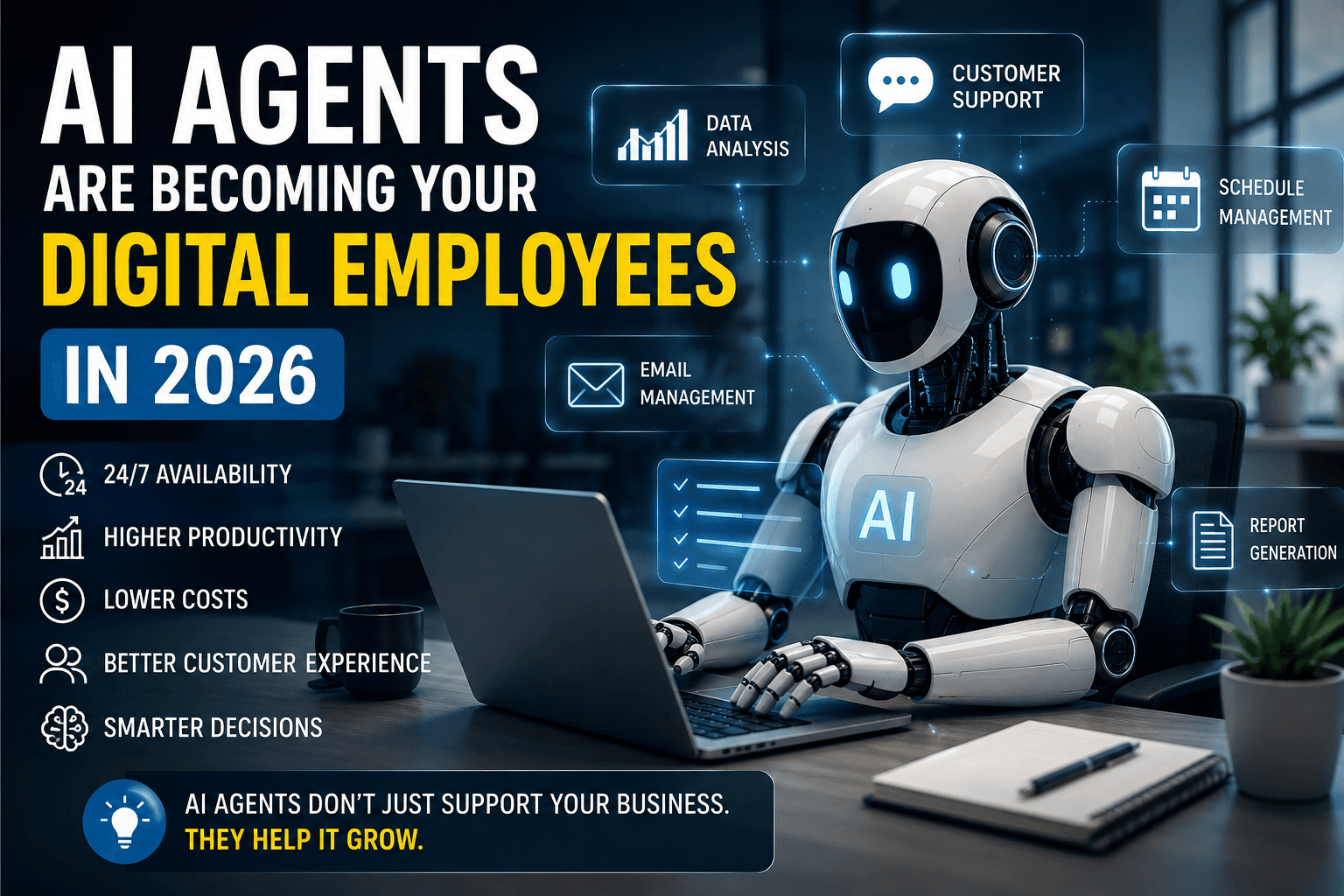
Artificial Intelligence has evolved far beyond answering questions or generating text. In 2026, AI agents are becoming an integral part of modern businesses, taking on responsibilities that once required dedicated employees. From handling customer support to managing workflows and analyzing data, these intelligent systems are helping organizations work faster, smarter, and more efficiently. Unlike traditional automation tools that follow fixed rules, AI agents can understand context, make informed decisions, and adapt to changing situations. They can collaborate with different software applications, complete multi-step tasks, and continuously improve through experience. This shift is redefining how businesses operate across industries.
What Are AI Agents?
AI agents are autonomous software systems designed to complete tasks with minimal human involvement. They don't just respond to commands—they can plan, execute, and optimize workflows based on specific goals.
For example, an AI agent can:
Reply to customer emails automatically.
Schedule meetings and manage calendars.
Generate business reports.
Analyze sales performance.
Track inventory levels.
Create marketing content.
Monitor business operations in real time.
Instead of switching between multiple tools, businesses can assign these responsibilities to AI agents, allowing employees to focus on strategic and creative work.
Why Businesses Are Adopting AI Agents
Companies are embracing AI agents because they deliver measurable improvements in productivity and efficiency.
Increased Productivity
AI agents operate 24/7 without breaks, enabling businesses to process requests faster and reduce delays.
Lower Operational Costs
Routine tasks that previously required multiple employees can now be handled by AI, reducing operational expenses while maintaining quality.
Better Decision-Making
Modern AI agents analyze large volumes of data in seconds, helping managers identify trends, predict outcomes, and make informed business decisions.
Improved Customer Experience
Customers expect quick responses. AI agents provide instant assistance, answer common questions, and escalate complex issues when necessary.
Where AI Agents Are Making the Biggest Impact
Customer Support
AI-powered assistants resolve customer queries, manage support tickets, and provide personalized recommendations around the clock.
Sales and Marketing
AI agents qualify leads, write personalized emails, analyze customer behavior, and automate campaign management.
Finance
Businesses use AI agents to generate invoices, track expenses, detect unusual transactions, and prepare financial summaries.
Human Resources
Recruiters use AI agents to screen resumes, schedule interviews, answer employee questions, and assist with onboarding.
Data Analytics
Instead of manually creating reports, AI agents collect, clean, analyze, and visualize data automatically, helping decision-makers gain insights faster.
Benefits for Small Businesses
AI agents are no longer limited to large enterprises. Affordable cloud-based solutions allow startups and small businesses to automate repetitive work without hiring additional staff.
Some key benefits include:
Faster response times
Reduced manual workload
Better customer satisfaction
Improved business efficiency
Lower operating costs
Data-driven decision-making
Challenges to Consider
While AI agents offer significant advantages, businesses should also plan for potential challenges.
Data Privacy
Organizations must ensure sensitive customer information is handled securely and complies with data protection regulations.
Human Oversight
AI agents should support employees, not completely replace human judgment. Critical decisions still require human review.
Integration
Successful implementation depends on how well AI agents integrate with existing business systems such as CRM, ERP, and accounting software.
The Future of AI Agents
As AI technology continues to evolve, future AI agents will become even more capable. They will collaborate with each other, manage complex workflows, learn continuously from business data, and provide highly personalized assistance across departments.
Businesses that begin adopting AI agents today will be better positioned to stay competitive, improve operational efficiency, and deliver exceptional customer experiences in the years ahead.
Key Benefits of Artificial Workflow Automation
Increased Productivity
Boost operational efficiency.
Cost Savings
Boost operational efficiency.
Improved Accuracy
Boost operational efficiency.
Scalability
Boost operational efficiency.
Better Decisions
Boost operational efficiency.